
ML Security Research Areas
Physical Adversarial Attack on Vision Systems
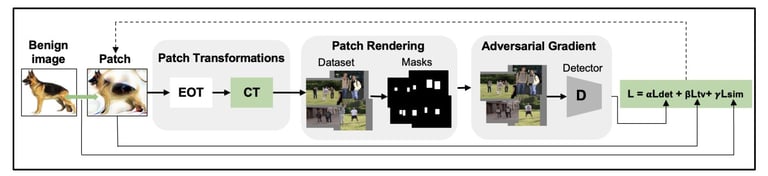
Focuses on real-world adversarial perturbations, including dynamic and shape-sensitive patches, transferable ViT-based attacks, and weather-like camera-lens effects, that mislead vision systems in tasks such as person detection, depth estimation, and autonomous driving.
Paper 1: DAP: A Dynamic Adversarial Patch for Evading Person Detectors
Adversarial Defenses For Vision Systems
Provides robust vision defenses that detect, transform, or block adversarial perturbations, including patch-based attacks, transferable attacks, and attacks on quantized or embedded EdgeAI vision models.
Paper 1: DRIFT: Divergent Response in Filtered Transformations for Robust Adversarial Defense
Paper 3: ODDR: Outlier Detection & Dimension Reduction Based Defense Against Adversarial Patches


Backdoor Attacks and Threats
Focuses on stealthy trigger-based attacks that compromise ML systems across domains, including object detection in ADAS, GNN-based hardware-security systems, and SNNs vulnerable to externally triggered bit-flip faults.
Paper 2: PoisonedGNN: Backdoor Attack on Graph Neural Networks-based Hardware Security Systems
Paper 3: NeuroAttack: Undermining Spiking Neural Networks Security through Externally Triggered Bit-Flips
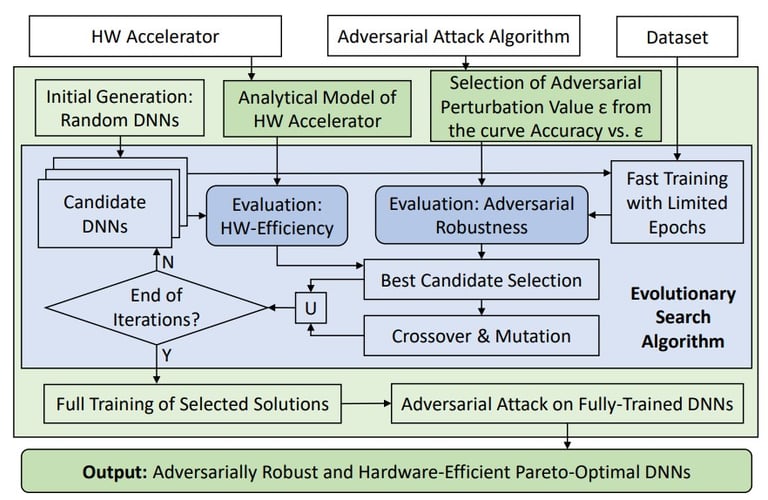
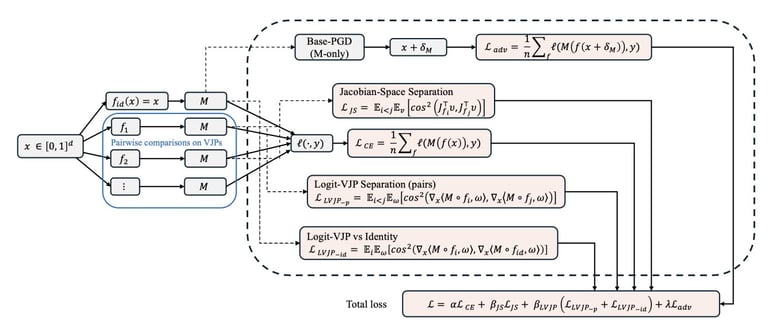
Capsule-Network Adversarial Robustness
Evaluates and improves the adversarial robustness of capsule networks, including their resilience to affine transformations and adversarial attacks while considering hardware-efficient neural architecture design.
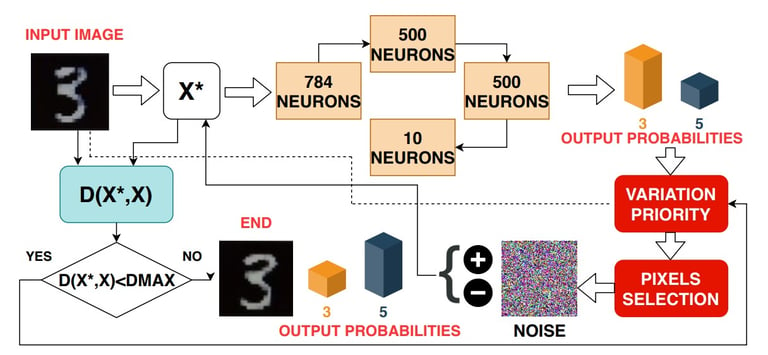
Attacks on SNNs, DVS systems, and Neuromorphic AI
Studies security vulnerabilities in neuromorphic AI, including adversarial attacks on spiking neural networks, Dynamic Vision Sensor event streams, and hardware-level bit-flip threats triggered by external inputs.
Paper 2: DVS-Attacks: Adversarial Attacks on Dynamic Vision Sensors for Spiking Neural Networks
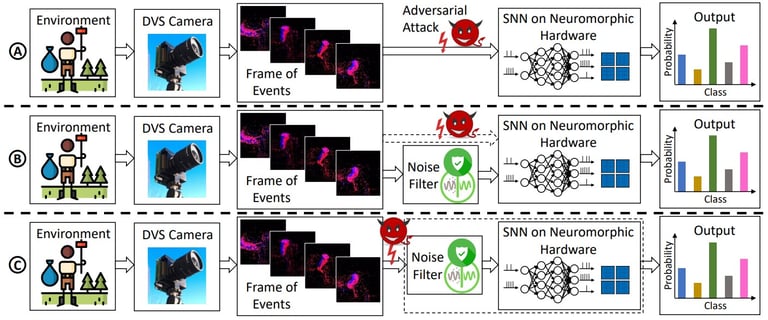
SNN Defenses and SNN Robustness
Improves the adversarial robustness of spiking neural networks by leveraging inherent SNN structural parameters and DVS noise-filtering techniques to reduce vulnerability to adversarial inputs.
Attacks and Defenses for ML-Based Hardware Security
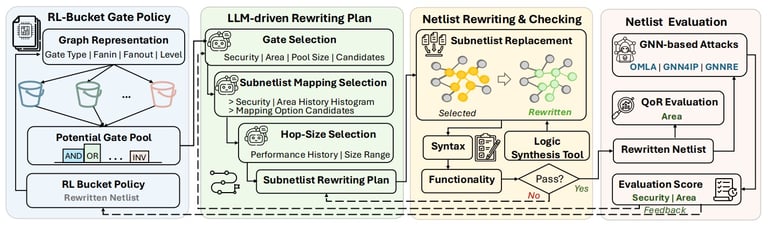
Focuses on adversarial and backdoor threats against ML-based hardware-security systems, particularly GNN models used for hardware analysis, including poisoning-based compromise and RL–LLM-guided evasion attacks.
Paper 1: PoisonedGNN: Backdoor Attack on Graph Neural Networks-based Hardware Security Systems
Paper 2: NetDeTox: Adversarial and Efficient Evasion of Hardware-Security GNNs via RL-LLM Orchestration
Medical-Imaging Adversarial Robustness
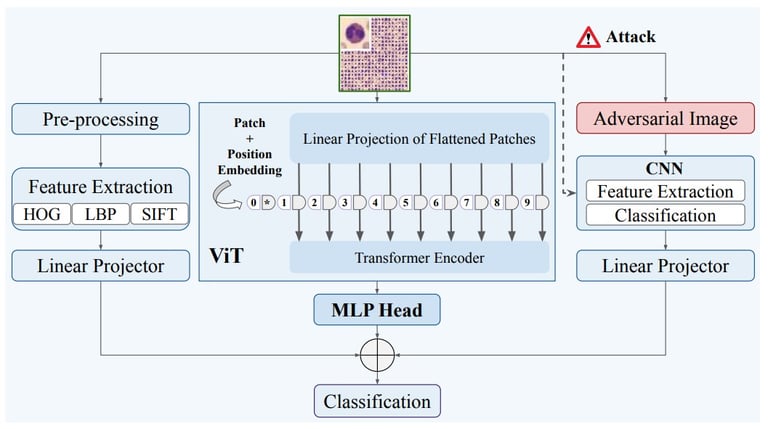
Addresses the adversarial resilience of medical-imaging classifiers, particularly Vision Transformer-based pipelines and hybrid defense techniques designed to maintain reliable diagnosis under adversarial attacks.
Quantum/Quantum-Federated Adversarial Robustness
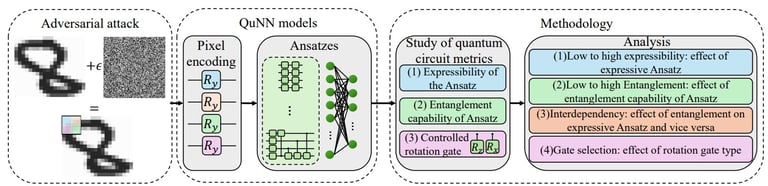
Focuses on analyzing and improving the adversarial robustness of quantum and quantum-federated learning models, including quanvolutional neural networks, robust quantum circuit design, and adversarial training in distributed quantum settings.
Paper 1: QFAL: Quantum Federated Adversarial Learning
Paper 2: RobQFL: Robust Quantum Federated Learning in Adversarial Environment
Paper 3: AdvQuNN: A Methodology for Analyzing the Adversarial Robustness of Quanvolutional Neural Networks
Broad Surveys, Roadmaps, and Threat Overviews
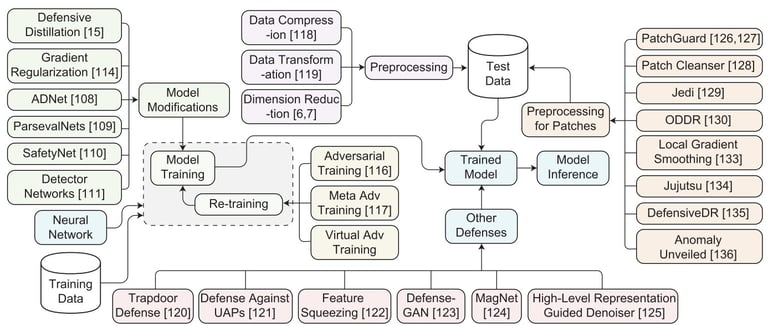
Presents comprehensive surveys and taxonomies of adversarial and backdoor threats, covering physical attacks on camera and LiDAR systems, backdoor attacks in deep learning, and defense methods for vision-based systems.
Paper 3: A Survey of Adversarial Defenses in Vision-Based Systems: Categorization, Methods, and Challenges






© 2026 eBRAIN