
Neuromorphic Computing Research Areas
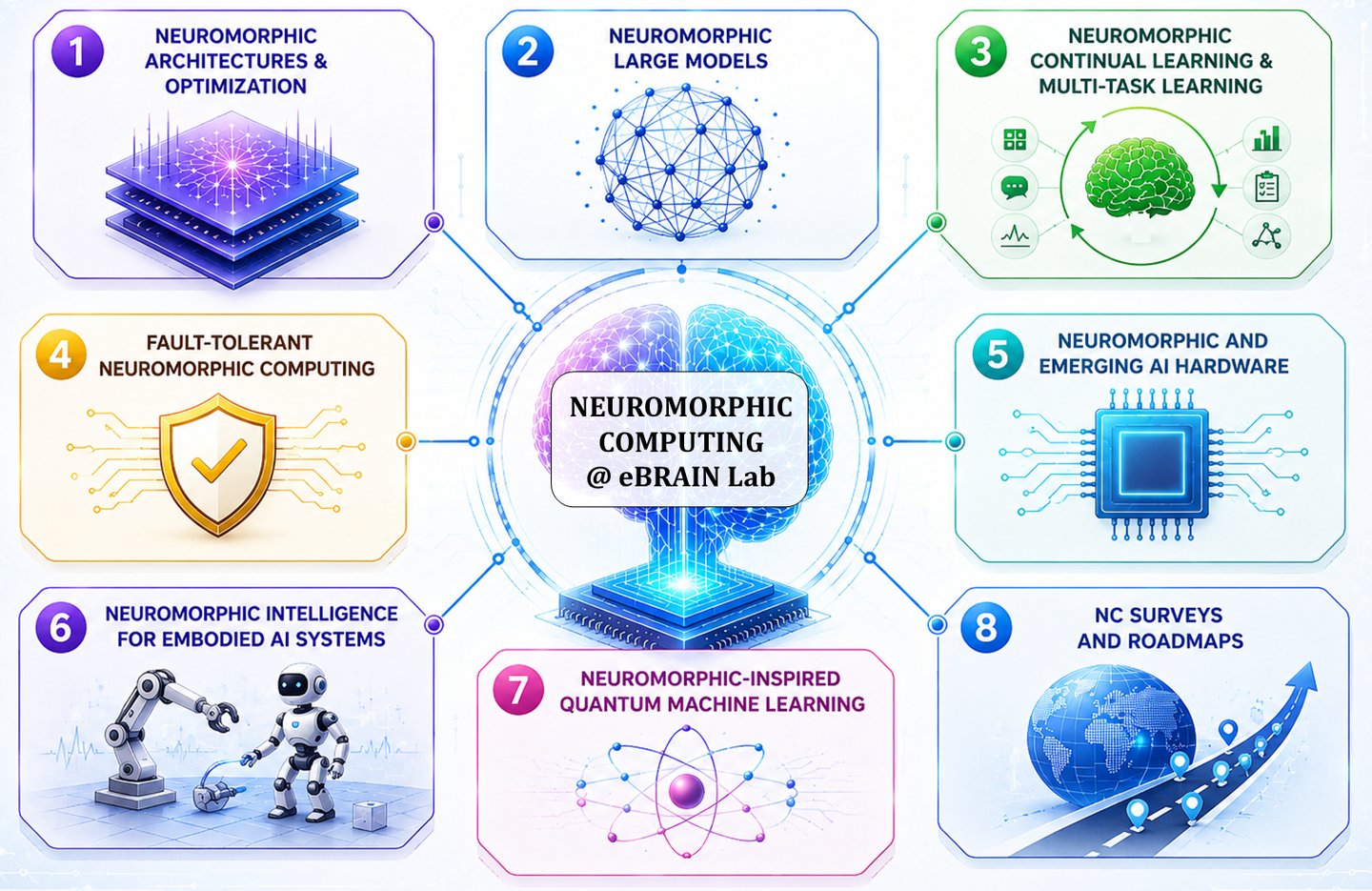
Neuromorphic Architectures & Optimization
Focuses on developing scalable, robust, and energy-efficient spiking neural network architectures through diverse methods, spanning from model development (e.g., spiking neural architecture search), learning enhancements, and model optimization.
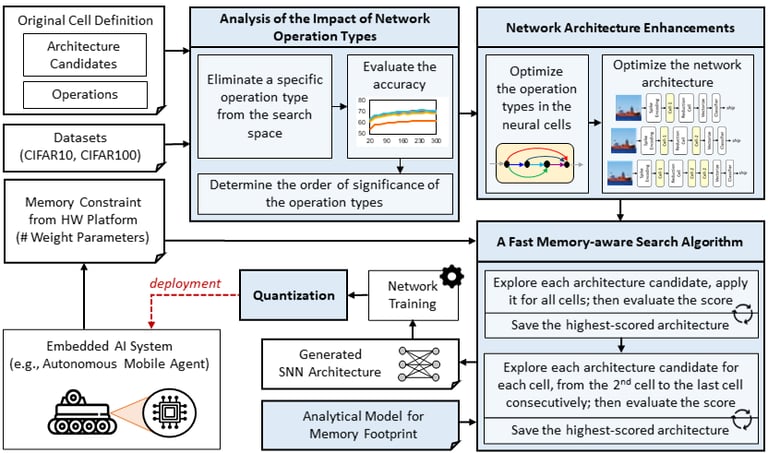
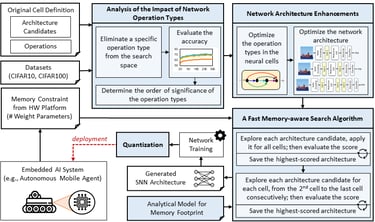
Paper 2: FSpiNN: An Optimization Framework for Memory-Efficient and Energy-Efficient Spiking Neural Networks
Neuromorphic Large Models
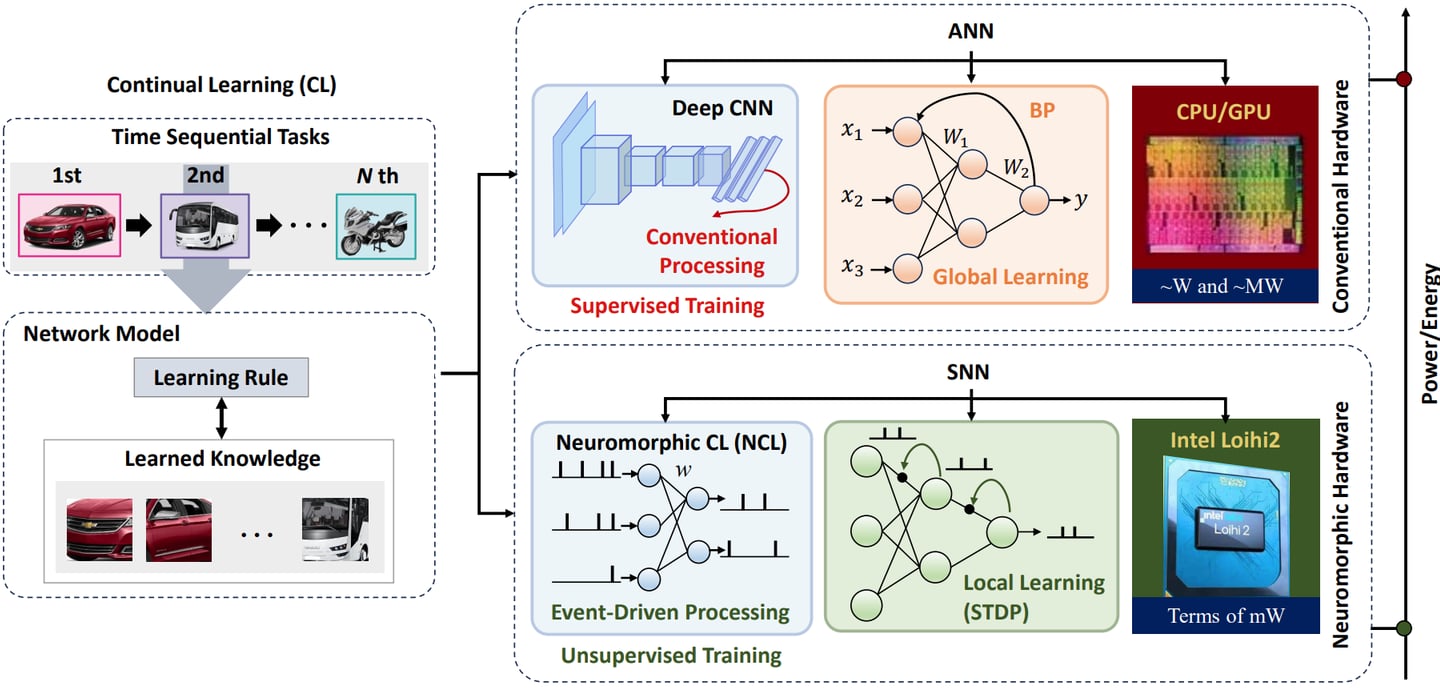
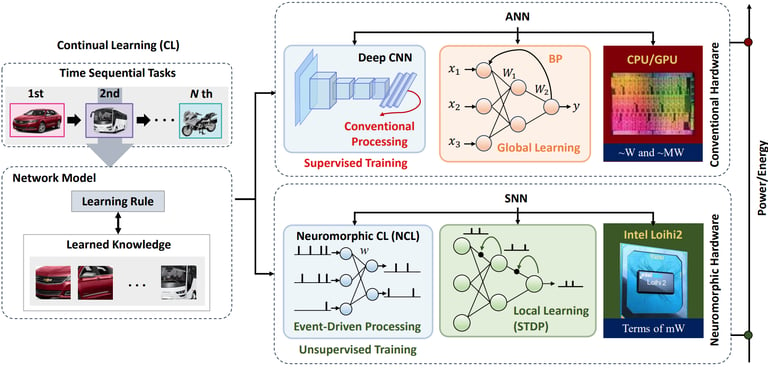
Neuromorphic Continual Learning & Multi-Task Learning
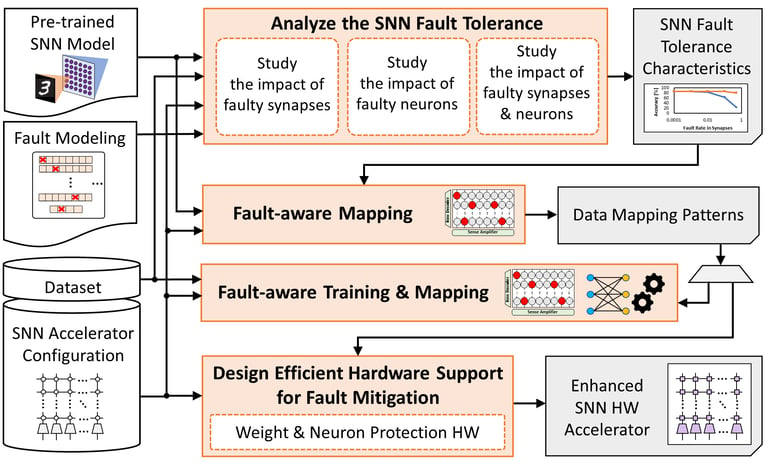
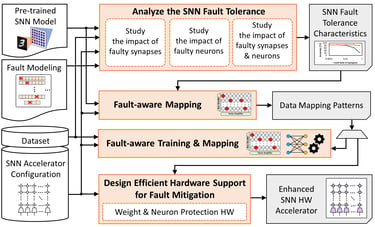
Fault-Tolerant Neuromorphic Computing
Neuromorphic and Emerging AI Hardware
Neuromorphic Intelligence for Embodied AI Systems
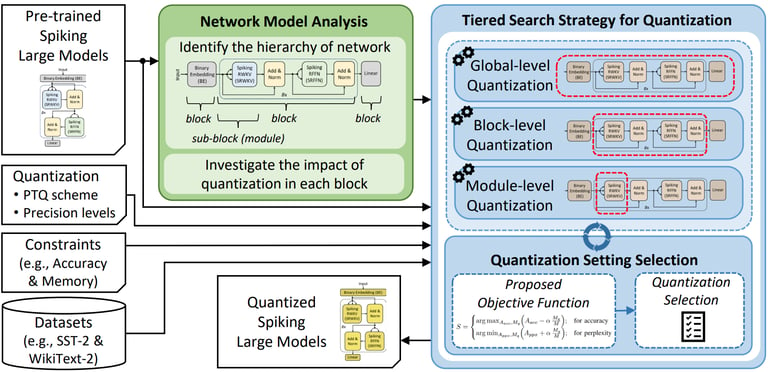
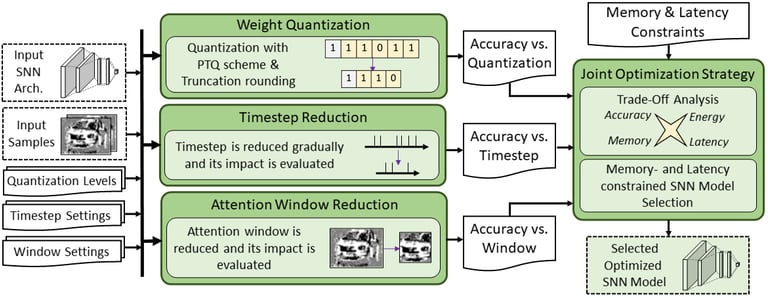
Explores methods to efficiently leverage spiking operations for processing emerging large models (e.g., spiking-based LLMs & ViTs), and systematically optimize them based on their unique characteristics for meeting the given performance (e.g., accuracy), memory, latency, and power/energy constraints.
Paper 2: QSViT: A Methodology for Quantizing Spiking Vision Transformers
Focuses on enabling continual learning (CL) and multi-task learning (MTL) capabilities for autonomous systems to efficiently adapt to dynamically-changed real-world environments by leveraging bio-inspired spiking neuron, network architecture, learning rule, neural coding, and training mechanism.
Develops fault-tolerant neuromorphic computing through hardware- and software-level techniques that mitigate the negative impact of permanent faults and trainsient faults (soft errors) in different parts of spiking neural net work models (e.g., weights) and neuromorphic hardware (e.g., memory and compute engine).
Paper 1: SoftSNN: Low-Cost Fault Tolerance for Spiking Neural Network Accelerators under Soft Errors
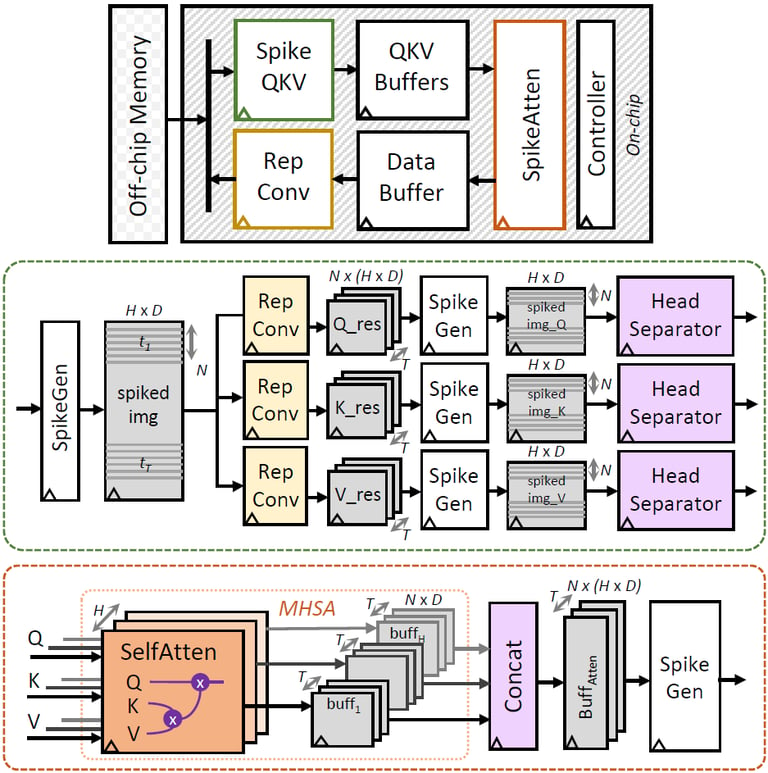
Develops neuromorphic hardware accelerators that efficiently expedite diverse spiking neural network workloads. This effort explores the use of conventional CMOS, emerging device technologies (e.g., ReRAM, PCM, STT-MRAM), and emerging hardware architectures (e.g., compute-in-memory, 2.5D integration, and photonics).
Paper 1: MorphAtt: A Neuromorphic Accelerator for Efficient Multi-Head Attention Processing in Spiking Vision Transformers
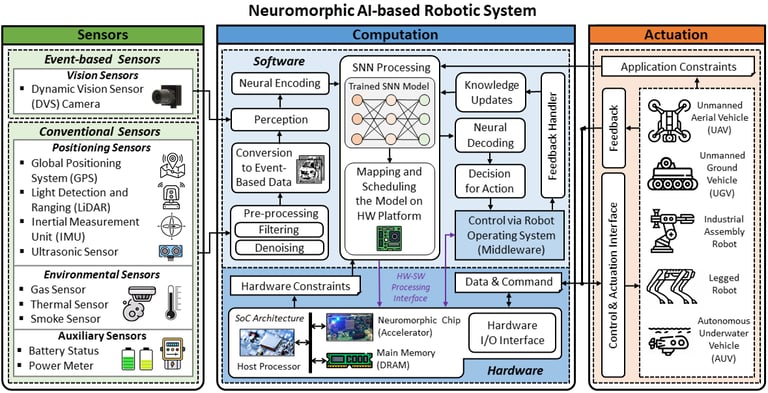
Focuses on the development of embodied AI systems (e.g., autonomous agents & robotics) that leverage neuromorphic computing, including development of spiking neural network models for processing event-based data stream, efficient sensor & actuation subsystems, and the efficient deployment of spiking neural network models on neuromorphic processors.
Neuromorphic-Inspired Quantum Machine Learning
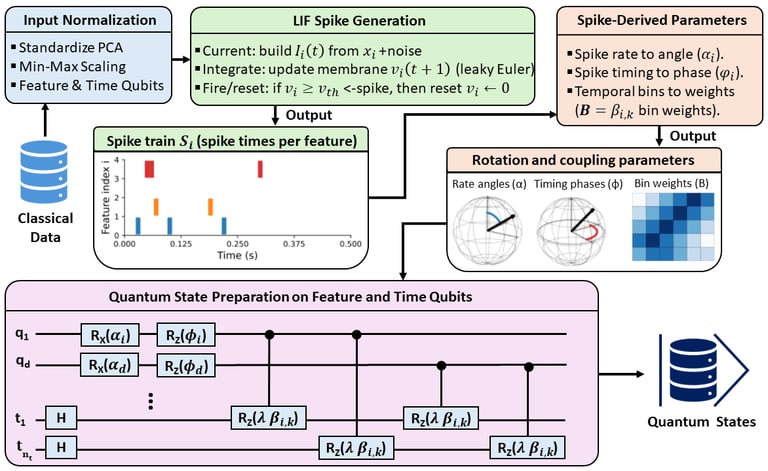
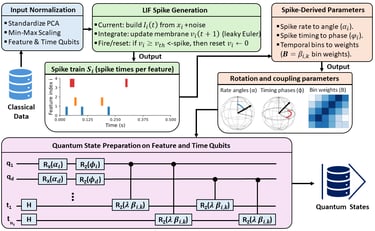
Studies the potential of leveraging bio-plausible neuromorphic computing concept (e.g., neural coding & spiking neuron) in enhancing the performance of quantum machine learning (QML).
Paper 1: SPATE: Spiking-Phase Adaptive Temporal Encoding for Quantum Machine Learning
NC Surveys and Roadmaps
Presents comprehensive surveys, roadmaps, and prespective for neuromorphic computing across diverse research directions, including leveraging neuromorphic computing for continual learning and embodied neuromorphic intelligence, such as robotics.
Paper 1: Continual Learning With Neuromorphic Computing: Foundations, Methods, and Emerging Applications
Team Awards
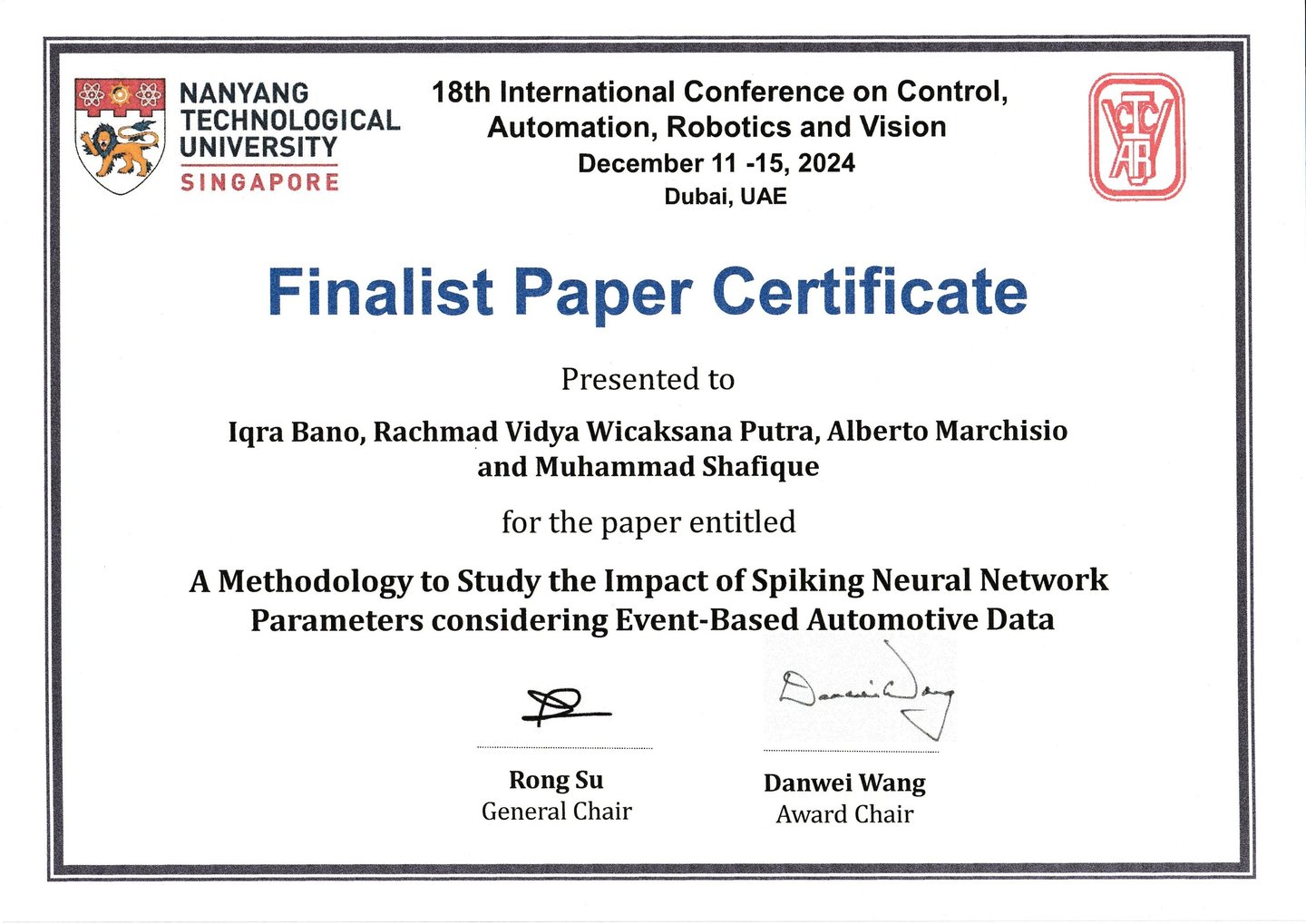
Best Paper Nomination in the 18th International Conference on Control, Automation, Robotics and Vision (ICARCV) 2024.
© 2026 eBRAIN